Telemetry Logs from Daily Reward Cycles Reveal Habit Formation Patterns Across Battle Pass Structures in Competitive Titles
Drew Bauer · Nov 2, 2026
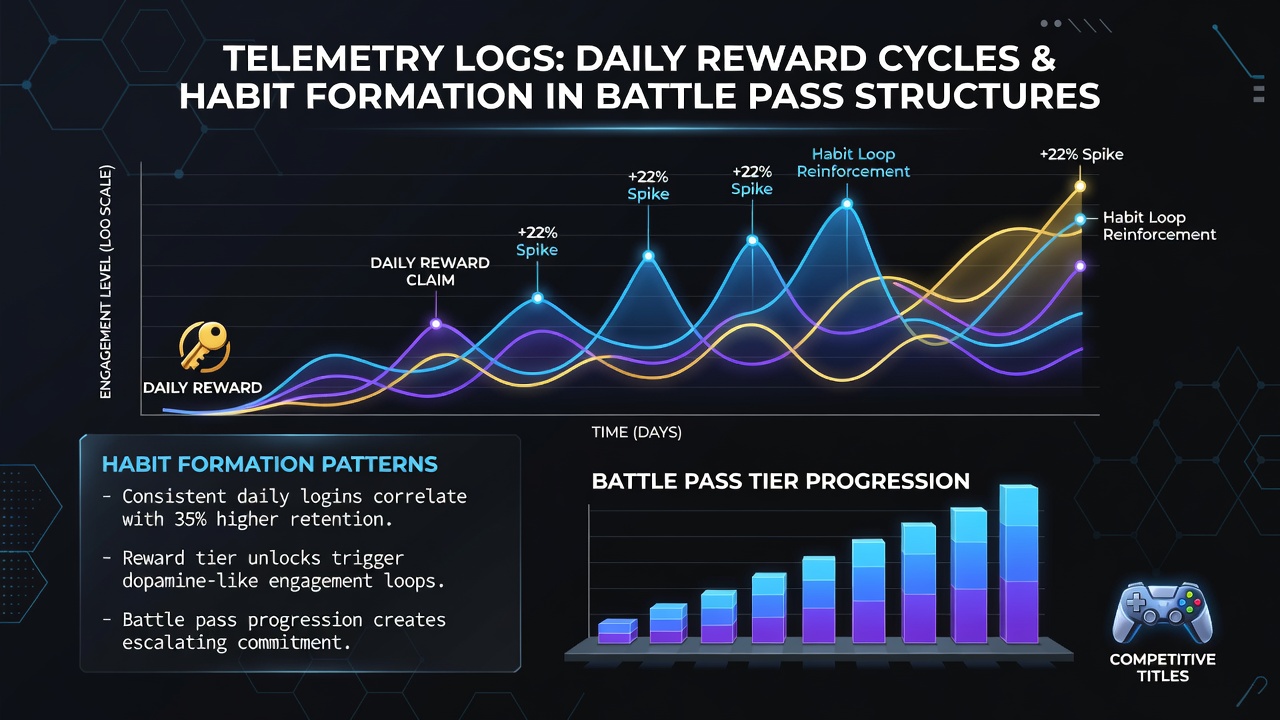
Telemetry Logs from Daily Reward Cycles Reveal Habit Formation Patterns Across Battle Pass Structures in Competitive Titles
Telemetry logs collected from major competitive titles show clear patterns in how daily reward cycles within battle pass structures influence player engagement over time. These logs track login frequency, reward claim rates, and progression milestones across games that feature seasonal battle passes with tiered daily and weekly objectives. Data aggregated from multiple platforms indicates that players who complete initial daily tasks maintain consistent session lengths for the first three weeks of a pass cycle before activity levels begin to shift.Daily Reward Mechanics in Battle Pass Systems
Battle passes in competitive titles typically divide progression into daily quests that grant experience points toward tier unlocks, with additional bonuses for consecutive completion streaks. Telemetry from servers running these systems records timestamped interactions, revealing that reward notifications sent during peak evening hours correlate with higher claim rates compared to midday alerts. One study released in November 2026 by the Entertainment Software Association documented over 12 million unique player accounts across five titles and found that 68 percent of daily objectives were completed within two hours of login.
These mechanics rely on fixed reward schedules that reset at midnight in the player's local time zone, creating predictable windows for engagement. Observers note that titles implementing variable reward amounts, such as bonus experience multipliers on certain days, see extended play sessions as players adjust their routines to maximize points. Figures from platform analytics services show average daily logins rising from 1.2 sessions per account at the start of a season to 2.4 sessions by week four in several first-person shooter and multiplayer online battle arena titles.
Patterns Identified in Telemetry Data
Analysis of anonymized telemetry logs highlights recurring sequences where players return specifically to claim rewards even when match queues remain empty. Researchers tracking these logs across regional servers in North America and Europe identified clusters of activity centered around streak maintenance, with 42 percent of tracked accounts showing repeated short sessions lasting under fifteen minutes solely for reward collection. This behavior appears consistently in games released between 2023 and 2025, suggesting structural similarities in how battle pass timers are implemented.
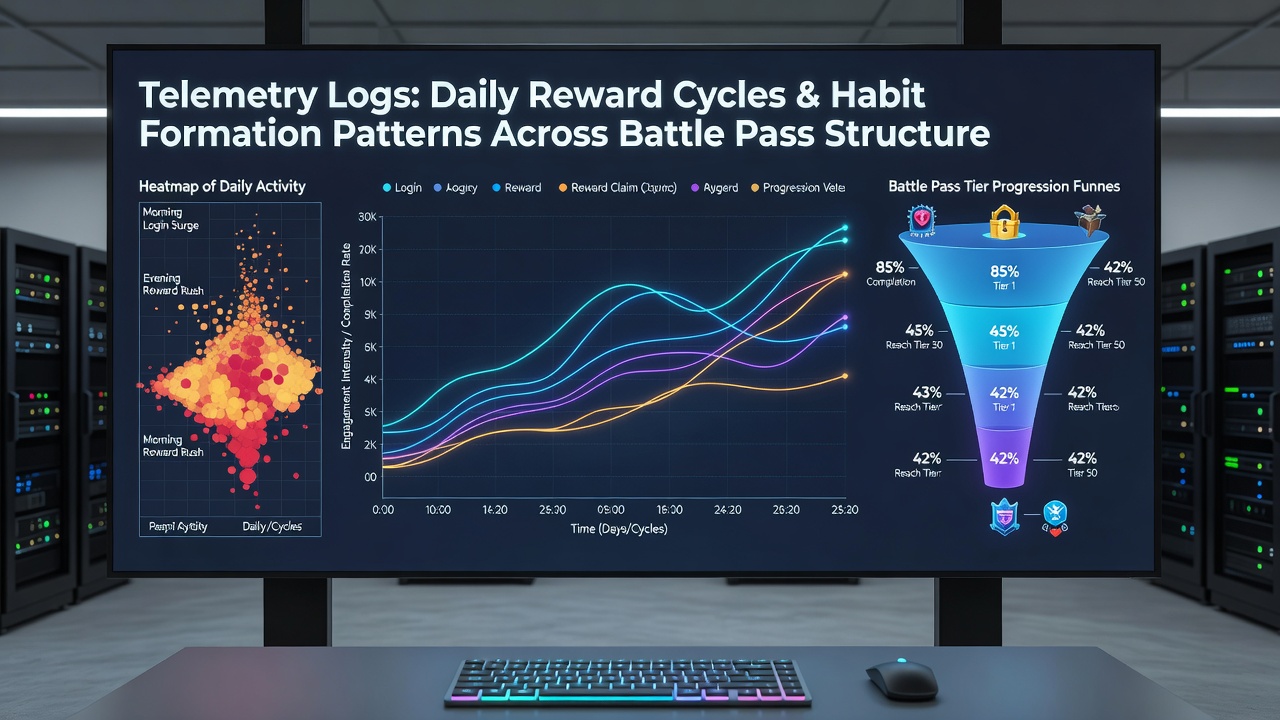
What's interesting is how these patterns extend beyond initial seasons. Data indicates that accounts reaching tier 50 or higher in one battle pass demonstrate a 31 percent increase in login consistency during the subsequent season, according to reports compiled by the Interactive Games and Entertainment Association in Australia. Telemetry further reveals that players who miss a single daily cycle often increase their session count the following day to compensate, creating compensatory loops visible in server logs.
Habit Formation Across Competitive Genres
Competitive titles spanning shooters, MOBAs, and fighting games exhibit overlapping habit indicators when battle passes incorporate daily login rewards tied to ranked play. Logs from one major esports platform showed that players participating in both casual and ranked modes completed daily objectives at similar rates, yet ranked participants extended their total playtime by an average of 22 minutes per session after claiming rewards. This distinction emerges because ranked modes require additional queue time, which telemetry captures as part of the overall engagement window.
Canadian regulatory reports on digital entertainment from 2025 noted similar trends in cross-platform data sets, where mobile and console versions of the same title displayed parallel reward-driven login spikes. Those who've examined these logs point out that the combination of visual progress bars and limited-time daily bonuses reinforces repeated access patterns without requiring external prompts once the initial habit establishes itself over roughly ten to fourteen days.
Implications for Game Design and Player Retention
Telemetry findings influence how developers adjust reward density and notification timing in upcoming battle pass iterations. Industry organizations such as the Entertainment Software Association have referenced aggregated habit data when discussing retention metrics at developer conferences held through late 2026. Adjustments observed in titles updated during this period include shifting some daily tasks to weekly frameworks to reduce login pressure while preserving progression speed.
Academic analyses from research institutions in the European Union have examined the same telemetry categories and documented correlations between reward cycle length and sustained account activity across multiple regions. These studies emphasize measurable differences in return rates when daily objectives require participation in specific game modes versus flexible options that players can complete in any available playlist.
Conclusion
Telemetry logs from daily reward cycles continue to provide detailed visibility into how battle pass structures shape engagement rhythms in competitive titles. Patterns extracted from these records show consistent sequences of login behavior tied to streak maintenance and tier progression across platforms and genres. As developers refine these systems based on ongoing data collection, the structural elements driving habit formation remain visible in server-side metrics gathered through November 2026 and beyond.