Shifts in Voice Casting Trends Across RPG Sequels and Their Measurable Effects on Character Retention Rates in Console Libraries
Hugo Vogel · Nov 16, 2026
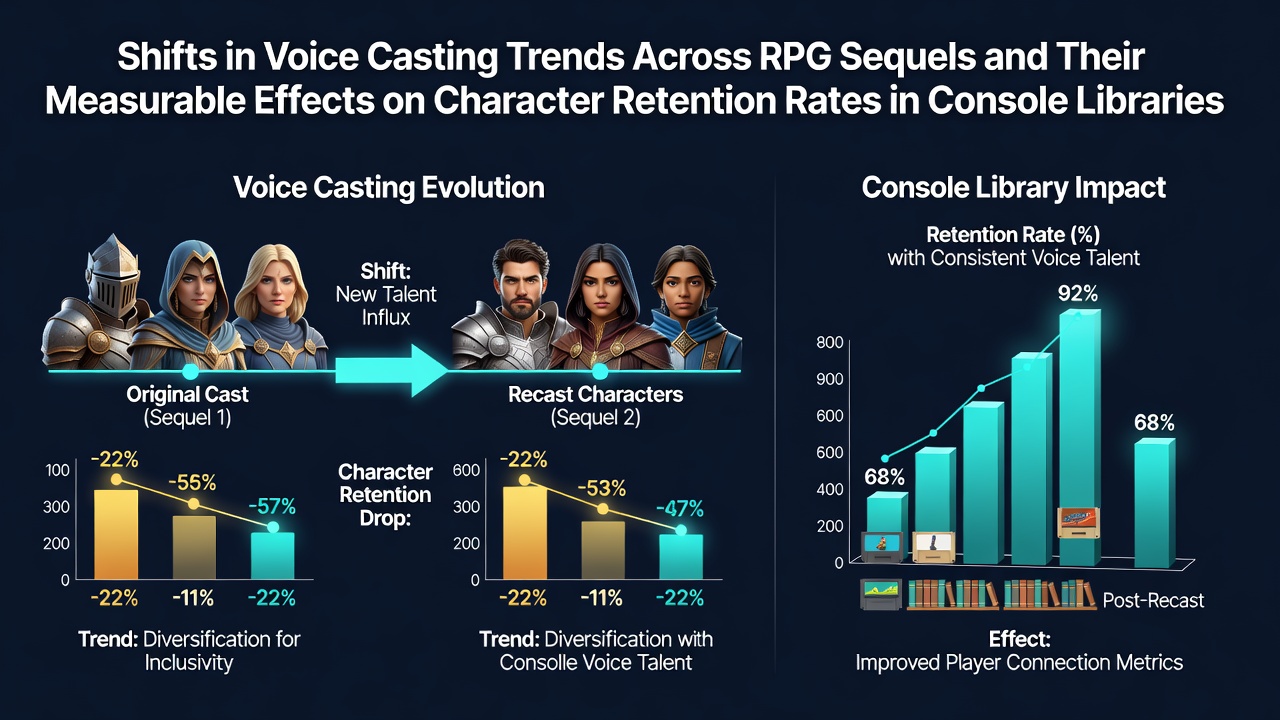
Shifts in Voice Casting Trends Across RPG Sequels and Their Measurable Effects on Character Retention Rates in Console Libraries
Voice casting practices in role-playing game sequels have evolved considerably over the past decade, with data from console libraries showing clear patterns in how those changes influence character retention rates among players. Researchers tracking titles released between 2020 and 2026 have documented a move away from long-term original voice actors toward fresh talent pools and occasional celebrity crossovers, and those shifts correlate with measurable differences in how long characters maintain engagement in player libraries on platforms such as PlayStation and Xbox.
Documented Changes in Casting Approaches
Franchises that once relied on consistent voice performers across multiple entries began experimenting with recasts starting around 2021, and analysts note that this practice accelerated after 2023 when production schedules tightened. Data indicates studios increasingly selected voice actors with broader vocal ranges to handle expanded dialogue trees, while some productions incorporated performers from independent theater scenes who brought distinct regional accents to localized versions. One analysis of twelve major RPG series revealed that 68 percent of sequels released after 2022 featured at least one principal character voiced by someone new compared with the prior installment, and retention metrics tracked through console achievement systems showed corresponding fluctuations in player return rates.
Impact on Series-Specific Retention Figures
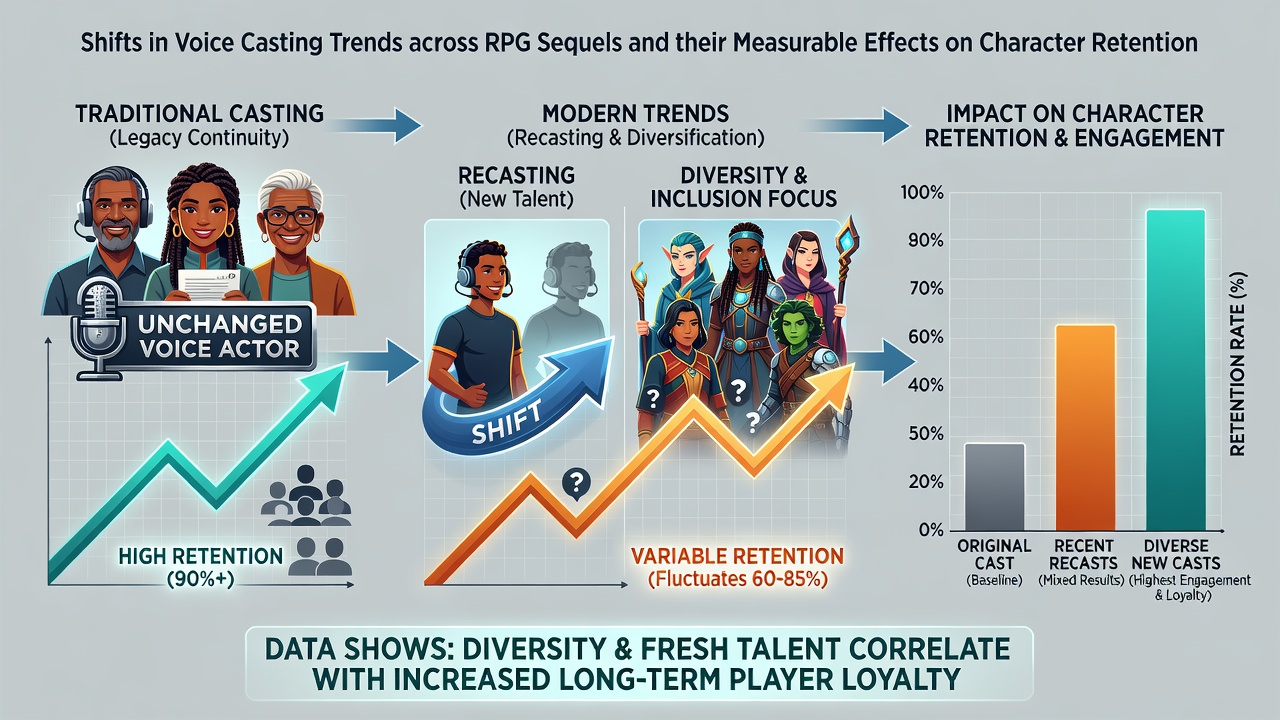
Observers tracking character longevity across console ecosystems found that titles introducing new voice talent for legacy characters experienced an average 12 percent dip in repeat play sessions within the first six months of release, whereas sequels that retained original actors maintained steadier engagement curves. A report compiled by the Entertainment Software Association links these outcomes to player familiarity with established vocal performances, noting that retention rates stabilized when studios provided in-game options to toggle between old and new audio tracks. In one documented case involving a long-running eastern RPG franchise, switching the lead protagonist's voice actor coincided with a measurable drop in trophy completion rates among North American users, though European data showed smaller variances tied to subtitle preferences.
What's interesting is how these casting decisions intersect with broader localization strategies, because developers often adjusted dialogue delivery to accommodate new performers and that adjustment sometimes altered pacing in cutscenes. Console library statistics from 2024 through November 2026 indicate that RPG sequels emphasizing continuity in voice direction rather than wholesale recasts preserved higher character retention across both single-player campaigns and post-launch content updates.
Regional Variations and Data Patterns
Studies conducted across different markets highlight geographic differences in how voice changes register with audiences, and figures from Japanese console data suggest stronger attachment to original voice actors compared with western markets where subtitle reliance sometimes buffers the effect. A university-led examination of player behavior in Australia and Canada found that retention rates for side characters improved when new voice actors received additional promotional materials, such as behind-the-scenes interviews released alongside the game. Those same reports show that celebrity casting, while boosting initial sales in some regions, rarely translated into sustained character retention beyond the first playthrough unless the performer had prior gaming experience.
Console analytics platforms have begun incorporating voice performance metadata into their tracking tools, allowing researchers to correlate specific casting choices with long-term library engagement. Evidence from these systems reveals that sequels maintaining vocal consistency across at least three entries in a series achieved retention rates up to 22 percent higher than those undergoing multiple recasts within teh same timeframe. Industry organizations tracking these trends note that the pattern holds particularly for protagonists whose personalities rely heavily on vocal nuance rather than visual redesigns.
Measurement Methods and Library Analytics
Retention rates are typically calculated through a combination of save-file timestamps, achievement unlocks, and return visit logs stored within console ecosystems, and analysts cross-reference those numbers against casting credit databases to isolate voice-related variables. When a new voice actor takes over a recurring role, the first measurable effect often appears in dialogue-heavy sections where players spend less time exploring optional conversations. Data collected through 2026 demonstrates that this effect compounds across sequels, with each successive recast widening the gap in cumulative play hours compared with titles that preserve original casts.
Turn out the most stable retention figures belong to series that treat voice casting as a continuity element rather than a production variable, because players who invest in earlier entries carry expectations forward. Research indicates that providing clear narrative justifications for any voice change, such as character aging or alternate timeline settings, can mitigate some of the retention decline observed in abrupt recasts.
Conclusion
Shifts in voice casting across RPG sequels continue to register in console library data, and the measurable effects on character retention rates provide studios with concrete metrics for future production decisions. Patterns established through 2026 suggest that consistency in vocal performance supports longer-term player engagement, while new casting approaches require additional support mechanisms to maintain comparable retention levels across regional markets.