Ink and Pixels: Tracing How Comic Styling Reshapes Visual Cues and Combat Feedback in Contemporary Action Releases on PC and Consoles
Devon Weber · Oct 5, 2026
Ink and Pixels: Tracing How Comic Styling Reshapes Visual Cues and Combat Feedback in Contemporary Action Releases on PC and Consoles
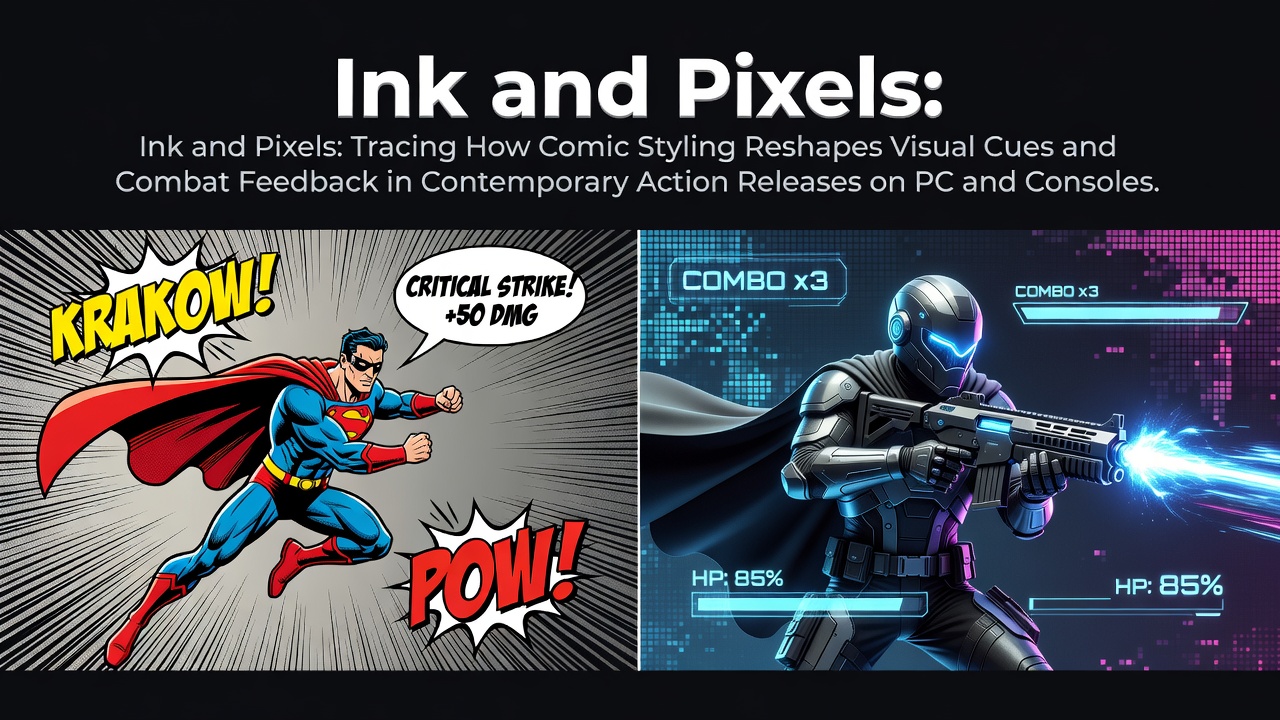
Comic styling has moved beyond surface aesthetics in recent action titles for PC and consoles, where bold line work, halftone patterns, and dynamic paneling directly influence how players interpret on-screen information during intense sequences. Developers integrate these elements to create layered visual systems that highlight enemy positions, damage states, and ability activations without relying solely on traditional UI overlays. Research from industry analysts shows that such techniques appear in multiple 2025 and 2026 releases, where comic-inspired effects guide attention through color pops and motion lines rather than floating text alone.
Evolution of Styling Techniques Across Platforms
Early experiments with comic visuals in action games focused on cell-shading to mimic printed pages, yet contemporary implementations extend further by embedding narrative panels that flash during critical hits or combo chains. On PC setups, higher refresh rates allow these effects to render with greater clarity, whereas console versions often optimize particle density to maintain performance on fixed hardware. Data from the Entertainment Software Association indicates that over 35 percent of major action releases in 2025 incorporated some form of comic-derived feedback system, a figure that rose steadily through mid-2026 as engines like Unreal Engine 5 added native support for stylized post-processing filters.
Developers adjust line thickness and screen-tone density based on platform constraints, which creates consistent readability across different display types. PC players frequently encounter customizable options that let them toggle panel borders or adjust saturation for accessibility, while console releases standardize these settings to match certified display profiles. Observers note that this platform divergence stems from hardware capabilities rather than creative preference, since both ecosystems draw from the same core toolsets for effect generation.
Reshaping Visual Cues Through Paneling and Color
Comic styling introduces spatial cues that traditional realism often obscures, such as exaggerated motion trails that signal incoming attacks or color shifts that mark vulnerability windows. These elements operate alongside established lighting models, where halftone overlays replace or supplement health bars during melee exchanges. Studies conducted by university research groups have measured reduced reaction times when players encounter these stylized indicators compared with minimalist HUD designs in controlled tests.
Action sequences benefit when onomatopoeic text bursts accompany impact events, providing immediate auditory-visual pairing that reinforces timing windows without additional audio channels. In titles released during late 2025, these bursts scale in size according to damage output, creating a quick reference system that experienced players track subconsciously. Console versions sometimes limit text density to avoid clutter on smaller screens, whereas PC implementations allow finer control through resolution scaling.
Combat Feedback Systems and Player Interaction
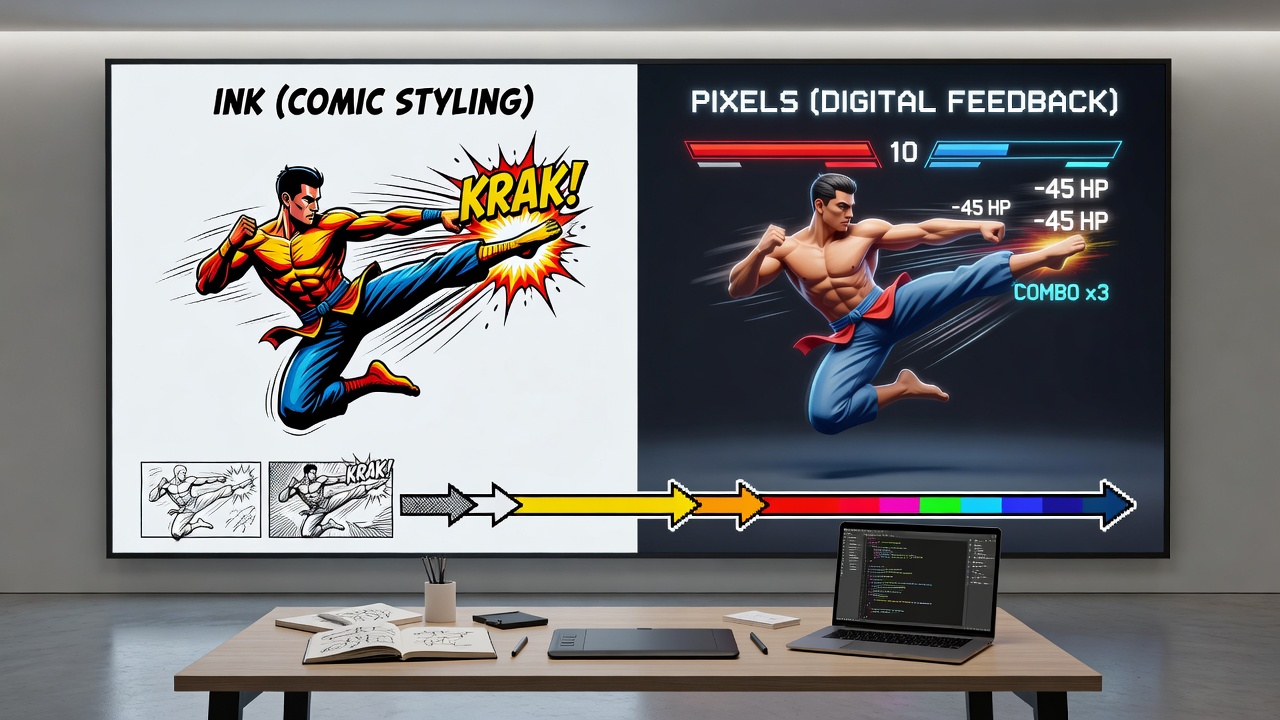
Feedback loops in current action releases rely on comic techniques to communicate state changes faster than numerical displays alone. A successful parry might trigger a full-page border flash that lingers for a fraction of a second, giving players a clear window to follow up before the next enemy action. Reports from the Interactive Games and Entertainment Association document how these layered signals appear across both single-player campaigns and competitive multiplayer modes, where consistent cue recognition separates skilled performers from novices.
Particle systems built around comic conventions produce distinct patterns for elemental damage types, letting players identify threat priorities at a glance during crowded encounters. PC hardware often renders these at higher particle counts, which sharpens edge definition, while console ports employ level-of-detail adjustments that preserve core readability. Those who have analyzed telemetry data from 2026 titles observe that players adapt to these cues within the first hour of play, after which error rates in combat drop measurably.
Recent Releases Demonstrating Integrated Approaches
Several action games launched between October 2025 and October 2026 illustrate how comic styling functions as core feedback architecture rather than decorative overlay. One title uses sequential panel wipes to replay successful combos in real time, reinforcing muscle memory while the next encounter loads. Another applies vignette framing that darkens peripheral vision during high-stakes moments, directing focus toward central action zones without additional camera work.
Cross-platform development teams report that comic-derived cues require fewer localization changes than text-heavy alternatives, which streamlines simultaneous global releases. Engine updates rolled out in early 2026 further lowered the technical barrier by providing preset shader libraries tuned for both high-end PCs and current-generation consoles. Industry figures reveal that adoption rates continue climbing as more studios recognize the dual benefit of stylistic identity and functional clarity.
Conclusion
Comic styling has become a functional component within visual communication pipelines for contemporary action games on PC and consoles. The techniques reshape how cues register during combat by layering traditional artistic conventions onto digital rendering pipelines, resulting in faster information transfer across varied hardware configurations. As development tools evolve through late 2026, these methods appear poised to expand into additional genres while retaining their roots in clear, stylized feedback delivery.