Biometric Chair Sensors Dynamically Adjust Difficulty Curves in Extended PC Gaming Sessions
Devon Weber · Nov 2, 2026
Biometric Chair Sensors Dynamically Adjust Difficulty Curves in Extended PC Gaming Sessions
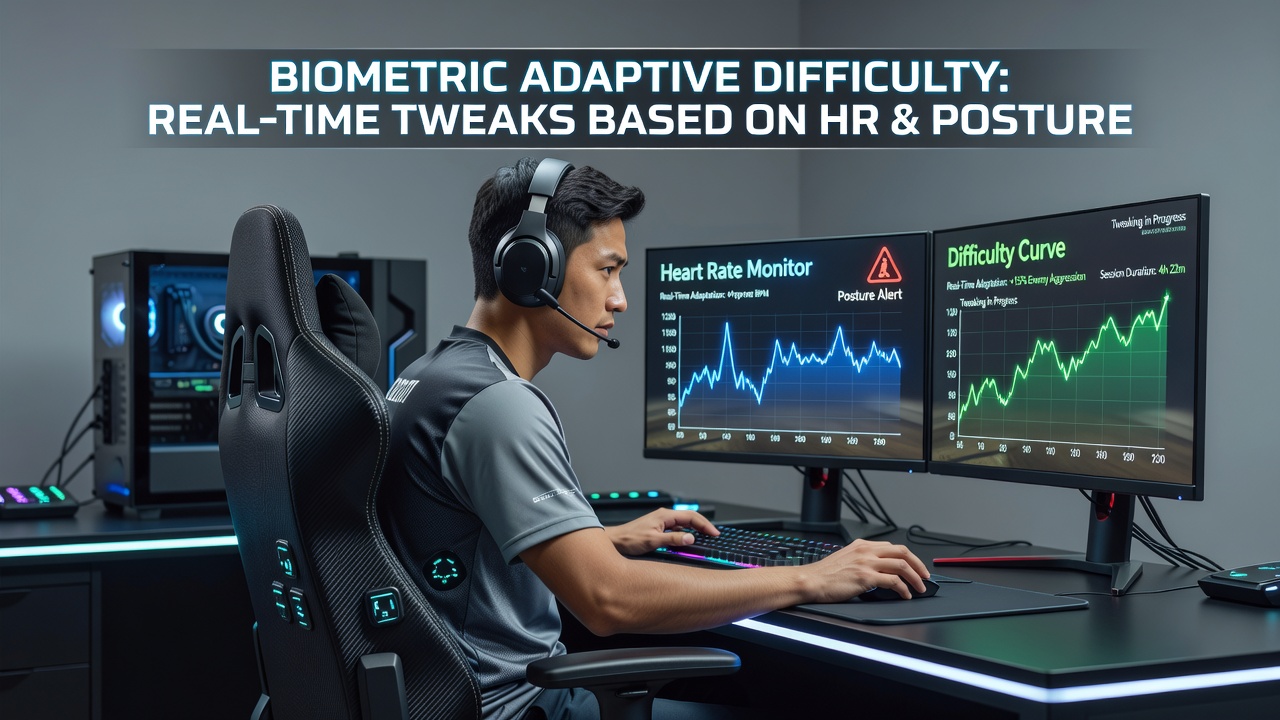
Competitive PC gamers participate in marathon sessions that stretch across several hours, and specialized chairs equipped with biometric sensors now feed live heart rate and posture readings directly into game engines to recalibrate difficulty parameters on the fly. These systems track cardiovascular responses alongside spinal alignment and seating pressure distribution, then translate the metrics into adjustments that scale enemy aggression, resource availability, or puzzle complexity without interrupting play. Researchers at multiple institutions have documented how such integrations help sustain engagement levels across extended periods, while data from industry reports shows adoption growing among professional teams preparing for tournaments.
Sensor Technology and Data Capture Methods
Chairs incorporate electrocardiogram pads in the seatback and armrests along with pressure-mapping matrices beneath the cushion and lumbar support zones, and these components sample signals at intervals ranging from every five to fifteen seconds. Heart rate variability serves as one primary indicator of cognitive load and stress accumulation, whereas posture shifts reveal fatigue onset through changes in weight distribution and spinal curvature angles. Algorithms process the combined dataset locally before transmitting summarized values to the connected gaming rig via secure wireless protocols, and this pipeline allows the game client to respond within milliseconds of detecting threshold breaches.
Developers integrate application programming interfaces that map biometric thresholds to specific game variables, so an elevated heart rate paired with forward-leaning posture might trigger a temporary reduction in opponent spawn rates or a slight increase in player damage output. Conversely, stable readings during high-intensity segments can prompt the system to introduce additional environmental hazards or tighten timing windows. Observers note that calibration routines performed at the start of each session establish individual baselines, accounting for differences in resting heart rates and typical seating habits among players from various regions.
Integration with Game Engines and Difficulty Scaling
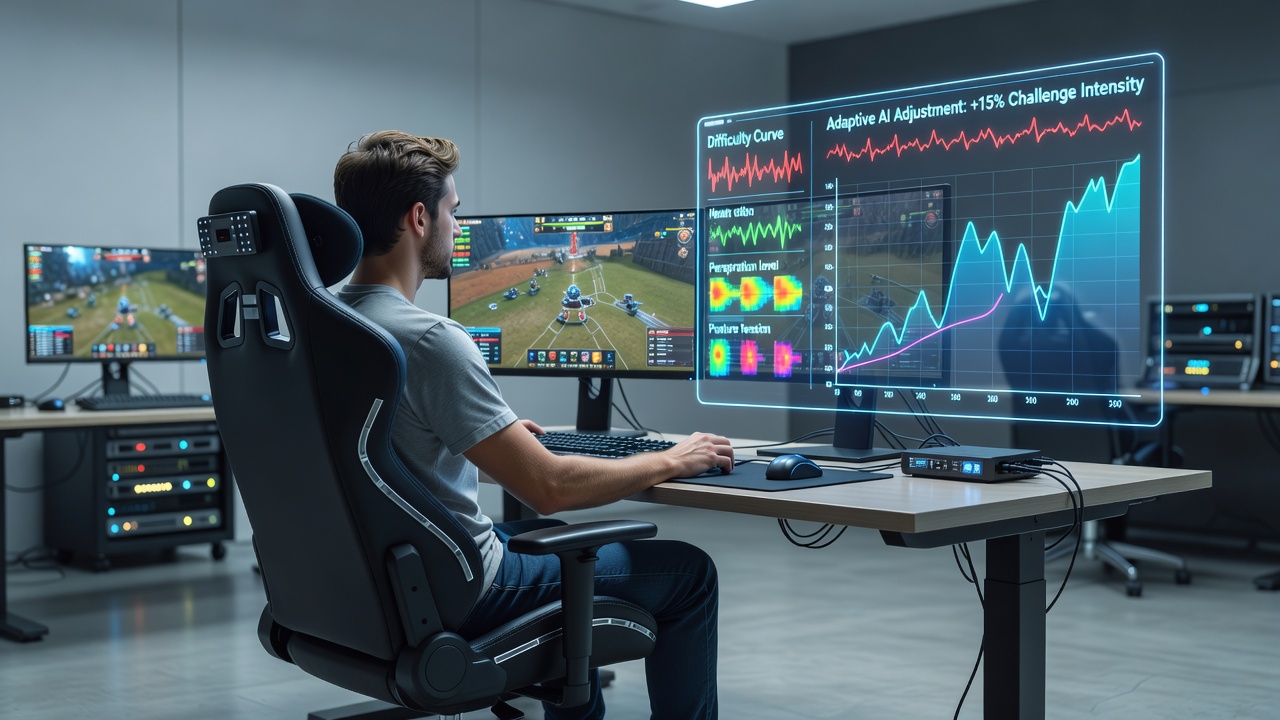
Modern engines such as Unreal and Unity receive biometric input streams through dedicated plug-ins that developers embed during the build process, and these modules operate alongside existing adaptive systems that already respond to in-game performance metrics. The combined approach creates layered difficulty curves where traditional skill-based adjustments receive modulation from physiological signals, producing sessions that feel responsive to both mechanical execution and bodily state. Figures from the Entertainment Software Association indicate that titles incorporating multi-source adaptation saw measurable retention gains in long-form competitive modes during 2025 testing cycles.
Posture data proves especially useful for identifying early signs of discomfort that precede performance drops, prompting the engine to soften certain mechanics before accuracy declines become evident in score logs. Heart rate spikes during critical moments, meanwhile, can cue the system to extend grace periods or supply temporary power-ups that prevent abrupt failure states. Engineers emphasize that these tweaks remain invisible to spectators and opponents, preserving competitive integrity while supporting individual endurance.
Applications in Competitive and Training Environments
Professional organizations began piloting biometric chair systems in training facilities throughout 2025, and several squads reported using the technology during preparation for major events scheduled into late 2026. One documented case involved a European squad that adjusted map rotation schedules based on collective posture trends observed across multi-hour scrimmages, resulting in fewer mid-session substitutions. Trainers review aggregated session logs to identify patterns where heart rate recovery times correlate with specific game phases, then refine practice regimens accordingly.
Academic studies conducted at institutions across North America and Australia have examined how real-time biometric feedback influences overall session length and error rates in simulated tournament conditions. These investigations compare sessions with active sensor-driven adjustments against control runs that rely solely on traditional difficulty scaling, and early results show reduced incidence of performance plateaus when physiological data informs the curve. Teams in the Asia-Pacific region have explored similar setups for mobile-to-PC crossover training, noting that posture monitoring helps mitigate strain during hybrid device sessions.
Developments Observed in November 2026
By November 2026, multiple hardware manufacturers released updated chair models featuring improved sensor density and lower power draw, and software updates from engine providers expanded the range of adjustable parameters available to developers. Tournament organizers began discussing standardized guidelines for biometric data handling to ensure privacy compliance across international events, while hardware certification programs emerged to verify sensor accuracy under prolonged use. Reports from the European Games Developer Federation highlight increased collaboration between chair producers and game studios to streamline integration workflows ahead of upcoming seasonal releases.
Training facilities have started incorporating biometric chair data into scouting reports for new talent, allowing coaches to evaluate how prospects respond physiologically to pressure scenarios rather than relying exclusively on kill-death ratios. This shift broadens evaluation criteria and supports more personalized development plans for athletes entering the professional circuit.
Conclusion
Biometric chair sensors continue to expand the toolkit available for managing extended competitive PC sessions through direct linkage of heart rate and posture measurements to dynamic difficulty parameters. As integration matures, the approach supplies an additional data layer that complements conventional performance tracking without replacing player skill as the core determinant of outcomes. Continued refinement through 2026 and beyond will likely focus on cross-platform compatibility and standardized data protocols that accommodate diverse regulatory environments while preserving the competitive fairness expected in professional circuits.